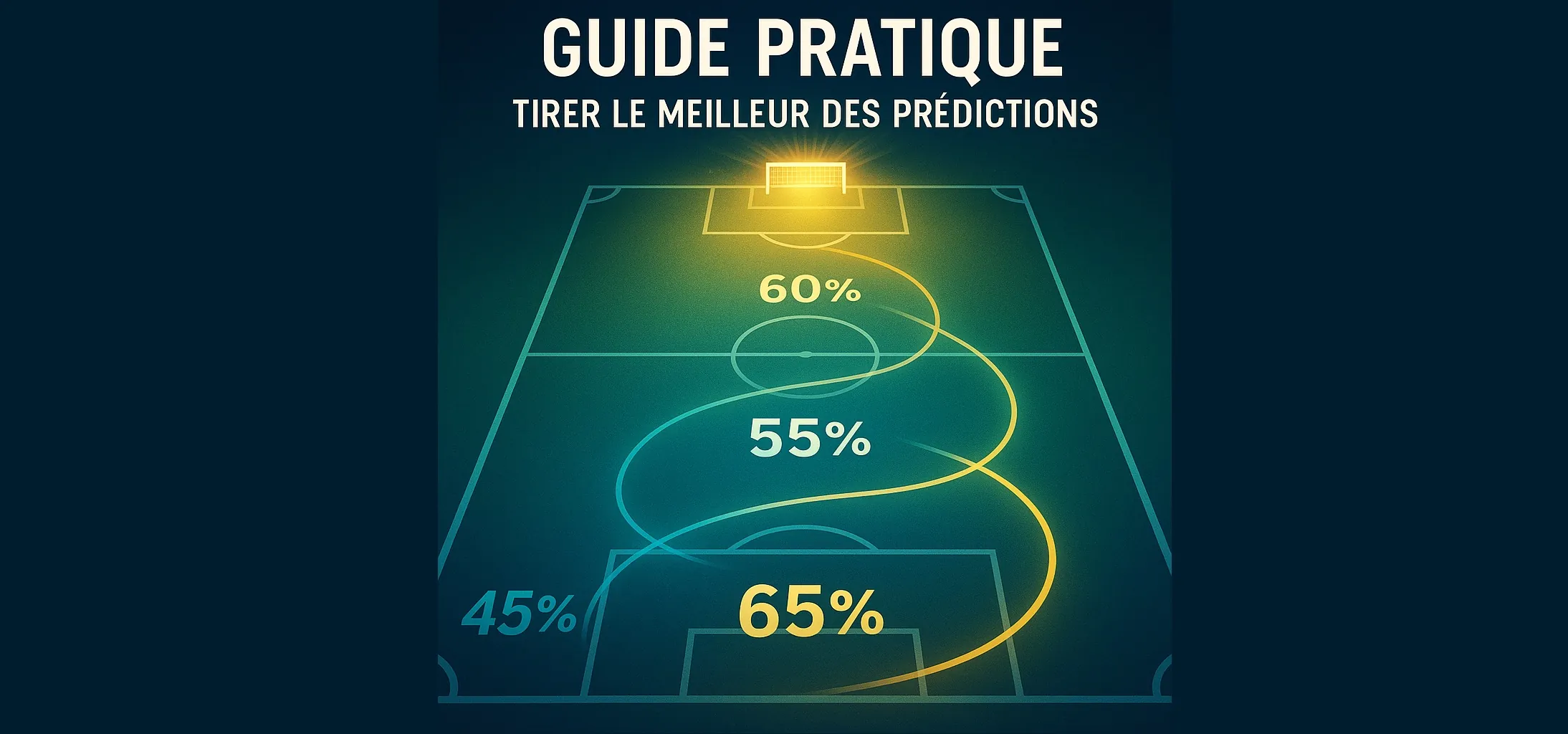
Why this guide exists
A probability (for example, 60%) is easy to misread. Foresportia therefore relies on a double threshold: match probability combined with a confidence index based on league stability.
The goal is to help choose a clear compromise between coverage (number of matches) and reliability (statistical stability).
The double threshold, explained
1) Probability threshold
This is the probability assigned to a given outcome. Increasing the threshold reduces volume but generally improves stability; lowering it increases volume but also fluctuations.
2) Confidence index (league-weighted)
Not all leagues behave the same way. The confidence index reflects observed reliability and acts as a safeguard: a high raw probability in an unstable league should be read with caution.
Choosing your balance: three simple profiles
Explorer
Threshold around 55–58% with exclusion of low-confidence leagues. Useful to learn and explore without excessive filtering.
Selective
Threshold around 60–62% combined with high-confidence leagues. Often the best compromise for consistent analysis.
Highly filtered
65%+ with strong confidence only. Very low volume, which can lead to misleading short-term impressions.
Conclusion
The double threshold encourages a responsible reading of predictions: probability as a match-level signal, and confidence index as a league-level reliability safeguard. The right setup is the one that remains consistent with your objective over time.
Quick FAQ
How should I read a probability on Foresportia?
A probability is an expected frequency, not a certainty for a single match.
Why does reliability matter?
Reliability shows how similar probabilities performed in historical data.
Does Foresportia promise an outcome?
No. The website provides probabilistic match reading and context, without guaranteed results.
Top match readings today
Continue with practical pages to read today's matches.
See today's match reading